
Business Units: What are They and When Would I Use Them?
June 22, 2026

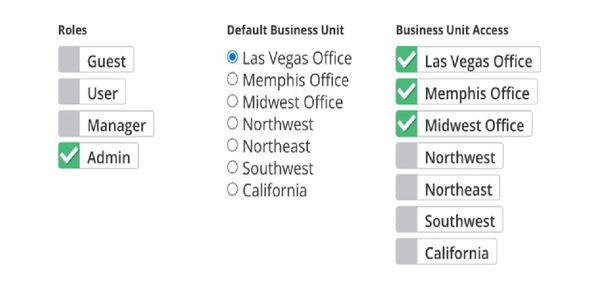
What are Business Units as they relate to construction?
Business units allow construction companies to organize projects, users, vendors, subcontractors, Prequalification forms, and workflows into separate operational divisions within a single software platform.
Rather than granting broad access across an entire organization, business units create defined boundaries that limit who can view, access, and manage projects and Prequalification forms.
Potential Use-Cases for Business Units:
- Joint Ventures; share only their applicable project(s) and subcontractors
- Allow an Owner/Client Access to their project(s)
- Sister Companies within your organization
- Regional Offices/Divisions
- Prequalification Forms/ Financials
Business Units provide a secure framework for collaboration while maintaining ownership and protection of sensitive company data.
Why Business Units Are Essential for Protecting Data in Joint Venture Construction Projects
Joint Ventures Create Opportunity—and Risk
Joint ventures (JVs) have become increasingly common in the construction industry. Large projects often require multiple General Contractors to combine resources, expertise, bonding capacity, and manpower to successfully compete for and execute complex projects.
While joint ventures can create significant opportunities, they also introduce a critical challenge: protecting sensitive company data.
When two or more contractors collaborate, each organization brings proprietary information into the relationship, including subcontractor databases, vendor relationships, historical pricing, estimating methodologies, bid lists, project contacts, and internal processes. Without proper controls, valuable business intelligence can be unintentionally exposed or shared beyond the intended scope of the project. This is where Business Units become an essential component of both operational efficiency and data security.
The Hidden Data Risks of Joint Ventures
Many contractors focus on legal agreements and profit-sharing structures when forming a JV. However, data exposure is often overlooked. Common risks include:
Sharing Proprietary Subcontractor Relationships
Subcontractor databases are often built over decades and represent one of a contractor's most valuable assets. Sharing unrestricted access can expose preferred subcontractors, historical relationships, and sourcing strategies.
Exposure of Historical Pricing Information
Estimating data, bid results, and pricing trends can provide competitive advantages in future pursuits. If improperly shared, this information can benefit future competitors.
Loss of Competitive Intelligence
Project contacts, procurement strategies, qualification criteria, and bidding practices can all become visible when access controls are not properly configured.
Internal Confidentiality Concerns
Not every employee participating in a JV needs visibility into every project, vendor, or subcontractor relationship. Excessive access increases the likelihood of accidental data disclosure.
How Business Units Protect Your Data
1. Segregate Subcontractor and Vendor Databases
Business Units allow each contractor to maintain ownership of its own subcontractor and vendor network.
Instead of exposing an entire database, companies can choose which contacts are available for specific projects or JV pursuits. This prevents one partner from gaining unrestricted access to years of relationship building and market intelligence.
2. Control User Access
Role-based permissions combined with Business Units ensure users only see information relevant to their responsibilities. Project teams can collaborate effectively while leadership maintains confidence that confidential company information remains protected.
3. Separate Bid Opportunities
Not every project should be visible across all business entities. Business Units help ensure JV opportunities remain isolated from unrelated projects, preventing accidental exposure of strategic pursuits, pricing information, and estimating activities.
4. Protect Historical Data
Historical bids, project records, vendor performance data, and estimating information often represent years of institutional knowledge. Business Units help ensure this information remains accessible only to authorized users and authorized business entities.
Best Practices for Joint Venture Data Management
When participating in a joint venture, consider the following best practices:
- Define data ownership before the project begins.
- Establish clear user permission policies.
- Limit access to only the information required for project execution.
- Segregate subcontractor and vendor databases whenever possible.
- Conduct periodic access reviews.
- Maintain audit trails of user activity.
- Use software platforms that support Business Unit level security and permissions.
- Remove user access immediately when team members leave the project.
Why This Matters More Than Ever
Construction companies are increasingly relying on digital platforms to manage preconstruction, bidding, subcontractor outreach, document sharing, and project collaboration.
As projects become larger and more collaborative, the volume of shared information continues to grow. The companies that successfully balance collaboration with data security will be best positioned to protect their competitive advantages while building strong JV partnerships.
Why Business Units Are Essential for Sister Companies and Regional Offices
As construction organizations grow, many expand through acquisitions, create sister companies, establish specialty divisions, or open regional offices to serve different markets. While these entities may operate under the same corporate umbrella, they often maintain unique relationships, processes, and strategic objectives.
Without proper organizational controls, growth can create operational inefficiencies, data security concerns, and confusion across teams. Business units provide the structure needed to manage multiple entities while maintaining visibility, accountability, and control.
Managing Sister Companies Without Losing Independence
Sister companies often share ownership but operate as separate businesses. Each company may have its own:
- Brand identity
- Estimating teams
- Subcontractor and vendor networks
- Project portfolios
- Customers and markets
- Financial objectives
Allowing unrestricted access across all companies can create challenges. Estimators may inadvertently use another company's subcontractor database, project managers may gain visibility into confidential pursuits, or business development teams may access strategic information intended for a different entity.
Business Units create clear boundaries between sister companies while still allowing executive leadership to maintain oversight across the organization.
Protect Proprietary Relationships
Subcontractor and vendor relationships are among the most valuable assets a construction company possesses. Sister companies may compete in different markets or maintain exclusive partnerships with certain trade contractors.
Business Units help ensure each company retains ownership and control of its own network while preventing unauthorized access to proprietary contacts and relationships.
Preserve Competitive Advantages
Each company develops its own estimating history, bid strategies, pricing intelligence, and market expertise over time.
By separating data through Business Units, organizations can prevent accidental exposure of sensitive information while preserving the competitive advantages that make each company successful.
Supporting Regional Offices While Maintaining Consistency
Regional offices face a different challenge. While they often operate under the same brand, each location may serve unique geographic markets with different subcontractors, vendors, labor conditions, and project opportunities.
Business Units help regional offices operate independently while maintaining corporate standards.
Organize Data by Geography
Regional teams can focus on their local markets without sorting through irrelevant projects, contacts, and bid opportunities from other territories.
This creates a cleaner and more efficient user experience while improving productivity.
Maintain Local Ownership
Regional offices often spend years building relationships with local subcontractors and suppliers. Business Units allow those offices to manage and maintain their own databases without interference from other regions.
The Best of Both Worlds
Business Units allow executive leadership to maintain visibility across all companies and offices while giving individual teams the independence they need to operate effectively.
Final Thoughts
Joint ventures can create opportunities that individual contractors may not be able to pursue alone, but successful partnerships require strong controls around business data.
Business Units help contractors manage sister companies, specialty divisions, and regional offices by improving data governance, operational efficiency, and scalability. They protect valuable assets such as subcontractor relationships, estimating intelligence, vendor data, and proprietary information.
By implementing Business Units, contractors can collaborate on projects while maintaining clear separation and control of sensitive business data.
Recent Posts

Top 12 Reasons General Contractors Choose PreconSuite® Over BuildingConnected®
September 8, 2026

Rick Dill is Featured in This Month’s DCD Magazine
August 20, 2026

How PreconSuite Was Founded: Rick Dill's Mission to Modernize Construction Bidding
August 14, 2026

The Top 4 Reasons Trade Partners Don’t Respond to Bid Invitations
June 9, 2026
Risk Scenarios Associated with Not Using Prequalification Software
May 27, 2026